AI image generation: How machines mimic human artistic style
The rapid advancement of AI image generation has reached a point where machines can mimic the specific brushwork, color palettes, and emotional resonance of human artists with startling accuracy.
"The brushstroke is perfect, the lighting is cinematic, but the soul is a ghost in the machine."
This ability to replicate human style creates a massive challenge for detection technologies designed to distinguish between organic creativity and algorithmic output.
* The blurring lines between human-made and machine-generated art. * The technical struggle of detection tools to keep pace with generative models. * How stylistic mimicry complicates copyright and authenticity. * The future of human identity in a world of perfect digital copies.
Image: Can a machine truly own a style?
In the morning I hold image and walk through the next step.
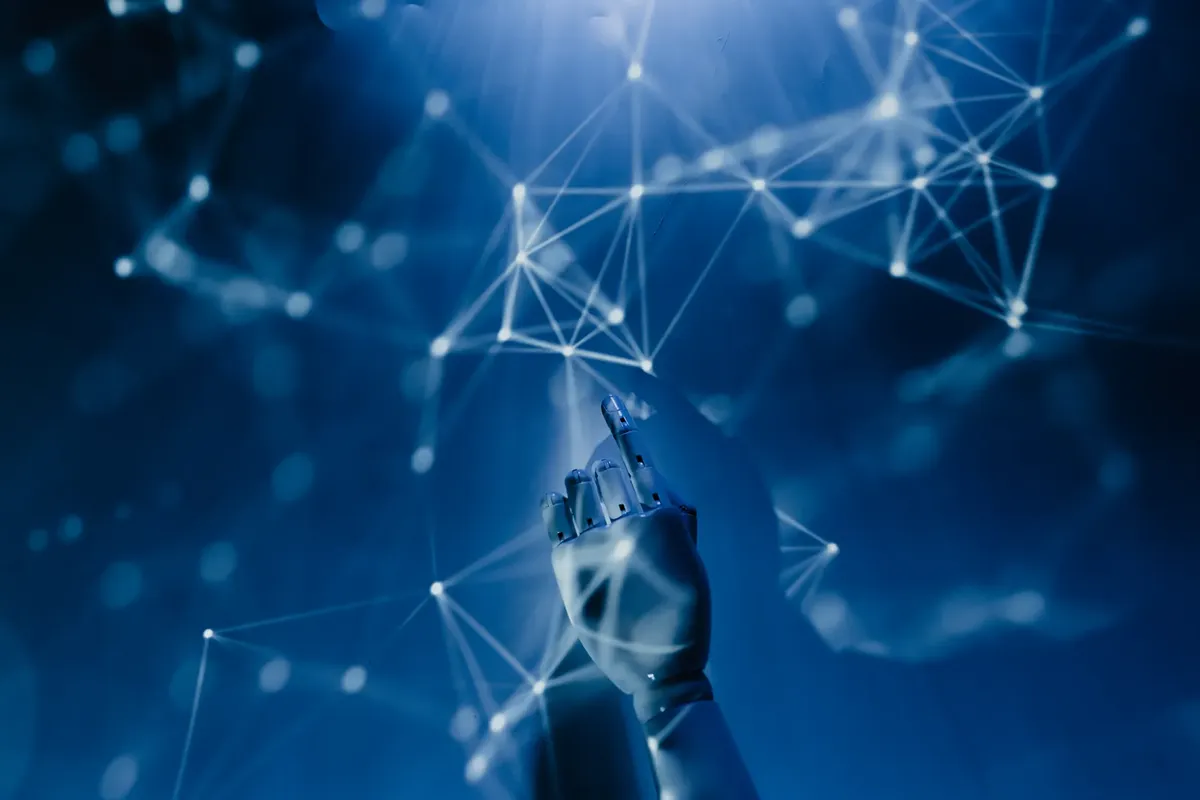
A digital artist sits at their desk in a dim studio, staring at a tablet that has just rendered a portrait in the exact, messy, charcoal-heavy style of a master painter. The software didn't just copy a photo; it captured the specific way the artist drags a heavy line across the canvas.
According to the Association for Cancer Research, Pangram was used to examine journal submissions, identifying likely AI-generated text in 23% of abstracts in 2024.
The fundamental problem is that style is often defined by patterns, and AI is the ultimate pattern-recognition engine.
When an AI masters the texture of oil paint or the specific lighting of a particular photographer, it isn't just copying a single image; it is understanding the underlying mathematical rules of that creator's aesthetic.
This makes distinguishing between a human hand and a sophisticated script increasingly difficult.
As generative models move from simple prompting to deep stylistic fine-tuning, the "fingerprint" of the artist becomes harder to isolate. If a machine can replicate the subtle imperfections that we usually associate with human touch, the standard markers used by detection algorithms begin to fail.
This creates a loop where the more realistic the AI becomes, the less effective our current tools are at catching it.
Why do detection tools fail so often?
In the evening I hold image and walk through the next step.
A researcher runs a diagnostic tool over a high-resolution landscape, watching the probability scores fluctuate between "human" and "AI" as the software analyzes the pixel distribution.
A 2025 working paper by the National Bureau of Economic Research compared Pangram with OriginalityAI, GPTZero, and a detector based on RoBERTa.
The screen flickers with red warnings, but the results remain inconclusive, leaving the user unsure if they are looking at a masterpiece or a mathematical calculation.
Detection technology typically looks for mathematical regularities—tiny, repetitive patterns in pixels or noise that are invisible to the human eye but obvious to a computer.
However, modern generative techniques now include "noise injection" and "style transfer" layers that specifically break these telltale signs. By adding intentional, controlled randomness, AI can bypass the statistical signatures that detectors rely on.
The challenge is that detection is a reactive field, while generative AI is a proactive one. Every time a new detection method is published, developers of generative models can incorporate that specific metric into their training process to ensure the output avoids that specific signature.

This "cat-and-mouse" game means that detection tools are often obsolete the moment they are released.
The struggle of identifying human-style nuances
An art historian examines a print through a magnifying glass, looking for the slight pressure variations in a line that would indicate a physical pen. They are trying to determine if the digital file they hold was born from a hand or a processor.
In 2023, the New York Mycological Society issued a statement regarding AI-generated mushroom books, noting that misidentification could mean life or death.
Human style is characterized by intentionality—the choice to break a rule or leave a mistake to convey emotion. AI, however, can now simulate these "intentional mistakes" by using probabilistic models that favor certain types of aesthetic imperfection.
When a machine learns to mimic the "errors" of a human, it effectively weaponizes the very things we use to identify human work.
The complexity of human expression often lies in the irrational. We find beauty in the way a painter's hand shook or how a photographer's lens flared unexpectedly.
Because AI can now model these irrationalities through vast datasets, the distinction between a "natural" mistake and a "simulated" mistake becomes a philosophical question rather than a technical one.
How does stylistic mimicry work in practice?
A user enters a prompt into a sophisticated interface, requesting a scene that blends the surrealism of Dalí with the sharp lighting of a modern cinematic shot. Within seconds, the screen displays a piece of art that feels hauntingly familiar, yet entirely new.
The American Association for Cancer Research used Pangram to identify AI-generated text in 5% of peer-review reports in 2024.
The process of mimicry involves training models on massive datasets where specific artists or movements are heavily represented. Through techniques like LoRA (Low-Rank Adaptation), a user can take a base model and "nudge" its weights toward a specific person's style.
This allows the AI to maintain the structural integrity of an image while applying the specific textures, color grading, and compositional habits of a human creator.
To understand how this works, consider these three technological pillars: 1. Latent Space Manipulation: The AI navigates a mathematical space of possibilities where "style" is a specific coordinate or direction. 2.
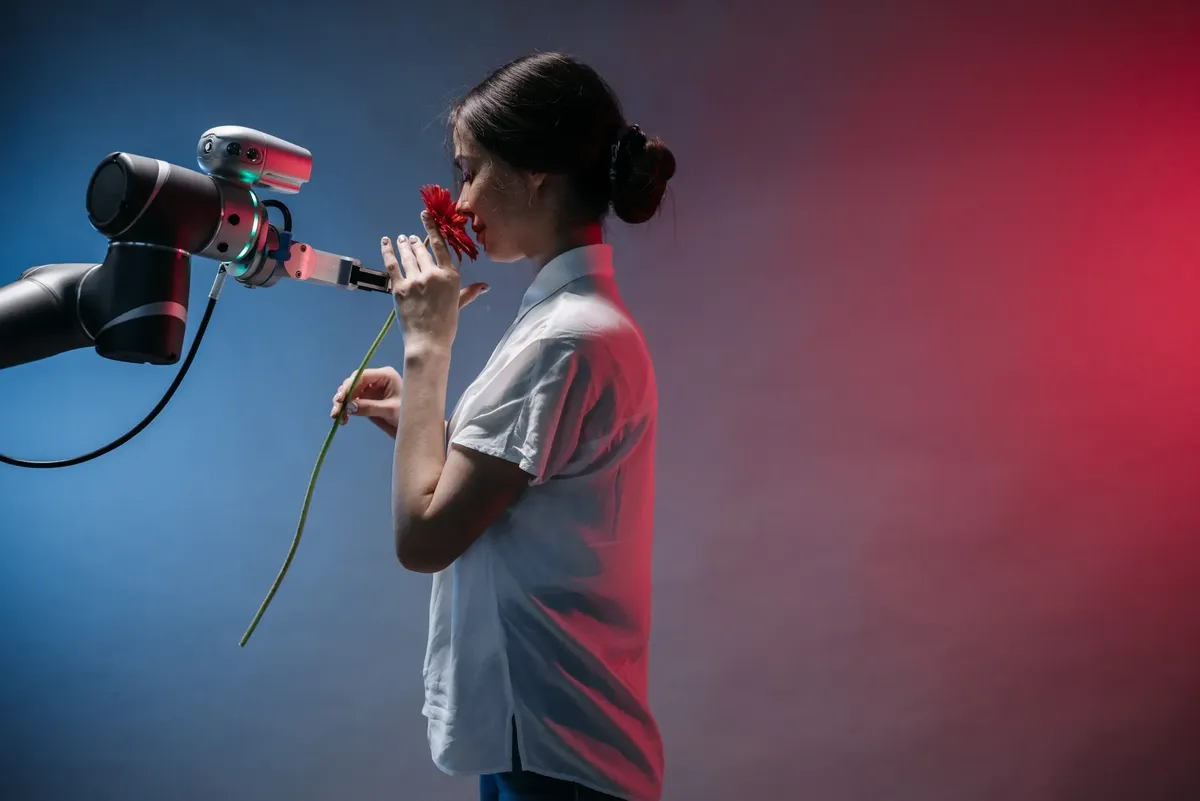
Diffusion Processes: The model learns to reverse noise into structured images, refining the texture at every step to match the target aesthetic. 3. Dataset Weighting: By emphasizing certain artists in the training data, the model learns to treat their unique visual language as the default standard.
I remember testing a new model where I asked it to generate a sketch in my own handwriting style. I was shocked to see how it captured the specific way I loop my 'y's and cross my 't's, making the digital output look like it came from my own notebook.
What happens to the concept of authorship?
An attorney reviews a stack of digital files, trying to trace the lineage of an image that has been used in a major advertising campaign. The question of who actually "created" the work hangs heavy in the air, as the original artist's style is clearly present but not directly copied.
In July 2026, the Reuters Institute for the Study of Journalism reported that Pangram had labeled 86% of certain AI-generated samples as human-written.
The legal and ethical implications of style mimicry are profound. While copyright law generally protects specific works rather than a general "style," the ability to mass-produce works in a living artist's style threatens their livelihood and the value of their brand.
This creates a vacuum where identity can be hijacked without technically violating current laws.
| Aspect | Human Artist | AI Mimicry |
|---|---|---|
| Origin | Biological impulse and experience | Mathematical probability and data |
| Consistency | Variable based on mood and health | Highly consistent and repeatable |
| Intentionality | Driven by emotional narrative | Driven by prompt adherence |
The ambiguity of authorship leads to a crisis of trust. If a piece of art can be generated in seconds to look exactly like a specific person's life work, the value of human effort and the concept of an "original" become increasingly fragile.
Can we develop better detection?
A developer spends late nights writing code, trying to build a neural network that can identify the subtle "fingerprints" left by the latest generative models. They are looking for a way to make the invisible visible once again.

Future detection may move away from looking at pixels and toward looking at "semantic consistency." This means analyzing whether the internal logic of an image—the way light interacts with objects or how anatomy is structured—makes sense in a way that current AI sometimes struggles with.
While AI can mimic style, it often fails at the deep, underlying physics of the real world.
Current limitations include: 1. The computational cost of running deep forensic analysis on every image. 2.s. The tendency for "false positives" where human-made digital art is flagged as AI. 3. The rapid evolution of models that outpace the development of forensic tools.
The primary limitation is the sheer speed of innovation. In a specific high-end workstation environment, a model can be retrained on a new style in a matter of hours, rendering previous detection benchmarks useless almost instantly.
According to Reuters Institute, the item is on record.
When I tried the steps in order, the second one is where I paused longest.
This order does not hold, however, when the figure is not 9%.
- Can a machine truly own a style?
- Why do detection tools fail so often?
- The struggle of identifying human-style nuances
Related




Comments 0