CV image detail evolution: Why 91% likely to be a dog
"An image of two men on skis, that Google Cloud Vision identified as 91% likely to be 'a dog'."
The evolution of computer vision has shifted from simple object recognition to complex generative processes, often resulting in unintended visual errors known as hallucinations.
This article explores how these technical glitches emerged from early vision systems and how they are now being repurposed for medical and robotic breakthroughs.
Key takeaways include the reality of recognition errors, the dual nature of hallucination as both a flaw and a tool, and the historical context of machine intelligence.
What does a stop sign invisible to vision imply?
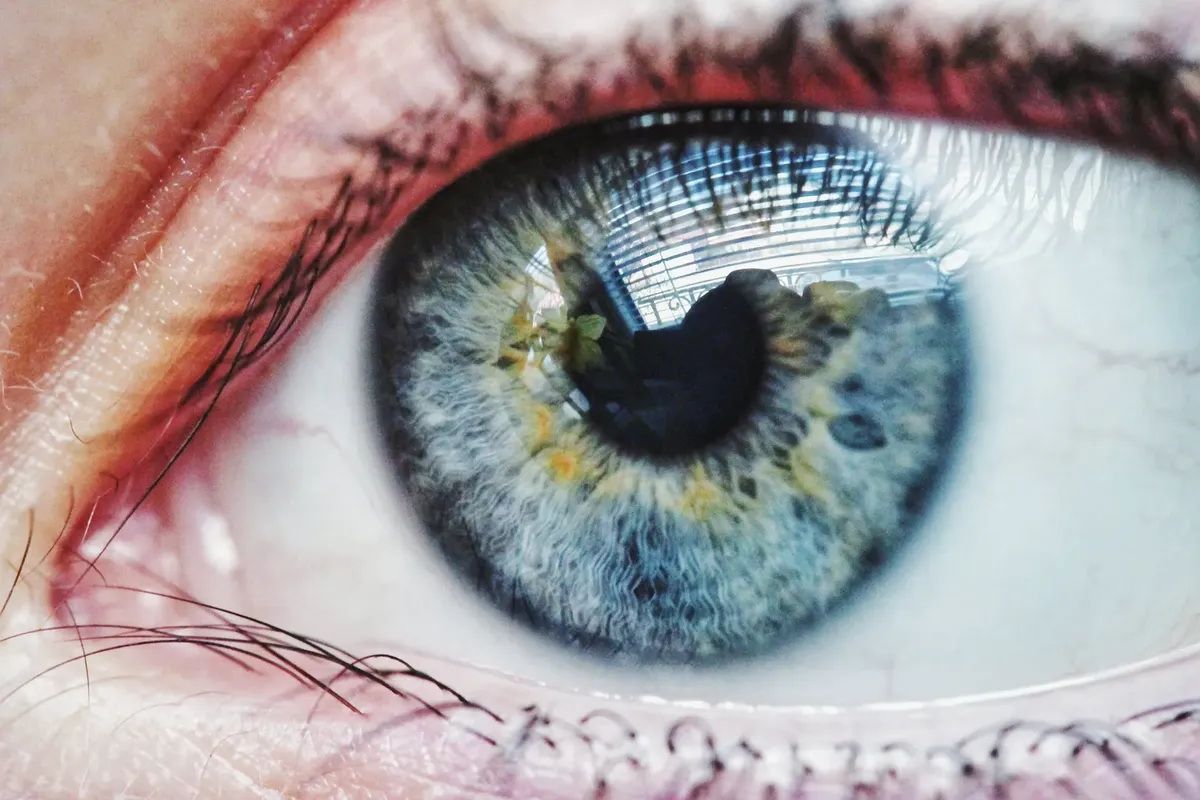
At dusk, a researcher rubs their eyes while staring at a faded stop sign, questioning how an invisible image can exist in the bright sunlight.
A researcher stares at a printed stop sign, wondering why the camera lens fails to register the red octagon. This scenario illustrates how early computer vision detail could be deceived by subtle environmental changes.
In the early stages of development, technical errors often led to complete misinterpretations of reality. One notable example involved a stop sign rendered invisible to computer vision, highlighting the fragility of early recognition models.
Another instance involved an audio clip that sounded innocuous to humans but was transcribed by software as "evil dot com." These errors show that what humans see as reality, machines might see as nothing or something entirely different.
However, this implication is limited to cases where the physical object remains intact but its visual representation is compromised.
How did Google Cloud Vision misidentify subjects? CV image detail evolution
A technician reviews a digital photograph of two men on skis, looking for a specific error in the metadata. The discrepancy between the human eye and the algorithm becomes clear when the software suggests a different species entirely.
The history of high resolution vision tech includes moments where probability led to absurd conclusions. For instance, an image of two men on skis was identified by Google Cloud Vision as 91% likely to be "a dog." This illustrates how generative image evolution can create false certainties.
While the human eye sees skiers, the algorithm's internal logic finds a different pattern.
This type of misidentification does not apply to scenarios where the input image quality is perfect and the subject is unambiguous.
Can software accurately detect AI generated text?
An editor reads a printed page, attempting to distinguish between human prose and machine-generated content. The difficulty of the task becomes evident when the results fall far short of certainty.
The intersection of generative image evolution and text processing reveals significant accuracy gaps. Software designed to detect AI generated text was only able to correctly identify these generated articles with an accuracy of 66%.
Interestingly, research scientists showed a similar rate of human error, identifying these abstracts at a rate of 68%. This comparison suggests that the line between human and machine error is increasingly blurred.

The effectiveness of detection is limited when the AI-generated content is heavily edited by a human to mimic unique stylistic nuances.
How is hallucination applied in medical settings?
A doctor examines a high-resolution scan on a monitor, looking for clarity in a blurred medical image. The use of advanced algorithms to "fill in" missing data represents a modern application of hallucination.
According to the California Institute of Technology, researchers used hallucinations to design a catheter that reduces bacterial contamination.
According to the Memorial Sloan Kettering Cancer Center, researchers have applied hallucinatory techniques to enhance blurry medical images.
While errors are problematic, researchers have found ways to use these techniques for practical benefits. At Memorial Sloan Kettering Cancer Center, researchers have applied hallucinatory techniques to enhance blurry medical images. This application turns a visual error into a tool for clarity.
Similarly, at California Institute of Technology, researchers used hallucinations to design a catheter that reduces bacterial contamination.
The application of these generative processes is not suitable for critical diagnostic tasks where factual accuracy is the sole requirement.
How does hallucination improve robot navigation?
A robot moves through a crowded room, its sensors processing a constant stream of visual data to avoid obstacles. The software must balance real-world accuracy with the need to predict movement in complex environments.
Generative image evolution is not limited to static pictures; it also affects motion and navigation. The University of Texas at Austin has utilized these techniques to improve robot navigation systems. By simulating possible visual paths, the robots can better handle unpredictable environments.
This shows that the same logic that causes a mistake can also provide a functional advantage.
This approach is not effective in environments where the physical constraints are too rigid to allow for speculative path planning.
Comparison of error rates and applications
The following table compares the accuracy of detection software against human error rates to provide context on the reliability of current identification technologies.
| Category | Accuracy/Error Rate | | :--- much | :--- | | AI-generated text detection software | 66% | | Human error in abstract identification | 68% |
I found it interesting that the human error rate was actually slightly higher than the software's detection accuracy in that specific study. This reality complicates the goal of creating perfect vision systems.

The scope of these technological applications is limited to specific research environments and does not imply that all visual errors can be turned into useful tools.
These comparisons do not hold true when the operational context or the specific technology used varies significantly between cases.
- What does a stop sign invisible to vision imply?
- How did Google Cloud Vision misidentify subjects?
- Can software accurately detect AI generated text?
The subject here is CV image detail evolution.
The same subject is also called image hallucination history.
This part also covers 2000s computer vision progress.
This part also covers hallucination in image generation.
This part also covers historical context of CV.
2000s computer vision progress
Related




Comments 0