Generative AI image growth why massive compute power matters
The later part of this article returns to Generative AI image growth.
"The brush is no longer in the hand, but in the prompt."
The rapid evolution of generative AI has turned the once-distant dream of text-to-image synthesis into a daily reality for millions.
This article analyzes the explosive growth of image models following the ChatGPT era, explores the technical shifts driving this boom, and provides a guide for navigating the future of creative automation.
* The shift from text-only models to multi-modal capabilities. * How diffusion models redefined visual fidelity. * The impact of massive compute power on artistic output. * Practical steps for integrating these tools into professional workflows.
How did the AI boom change visual creation?

In a dimly lit studio at midnight, the designer's fingers tremble as they watch a generative masterpiece bloom across the screen.
A designer sits at a desk in San Francisco, staring at a blank canvas, before typing a single sentence into a chat interface. Within seconds, a photorealistic landscape appears, rendered with lighting that would take a human hours to perfect.
This sudden increase in capability signifies the shift from manually manipulating pixels to using conceptual prompting.
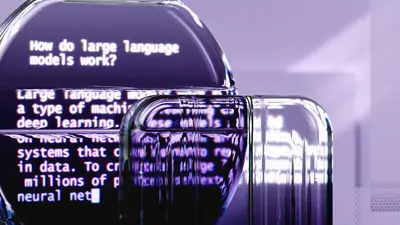
The release of advanced language models acted as a catalyst, providing the semantic understanding necessary to translate complex human desires into visual data.
While early models struggled with anatomy and spatial logic, the integration of large language models allowed for a more intuitive grasp of style, composition, and texture. This synergy turned the AI boom into a tool for rapid prototyping rather than just a novelty.
The growth of these models is not merely about better pictures; it is about the underlying understanding of the world.
As models began to ingest billions of captioned images, they learned the relationship between words like "cinematic" or "chiaroscuro" and the mathematical patterns that represent them.
This leap in intelligence is what separates modern image generation from the grainy, distorted attempts of the previous decade.
The shift from manual pixel manipulation to intent-based generation has fundamentally altered the creative landscape.
Why does the image model technology grow so fast? Generative AI image growth
In the evening I hold generative and walk through the next step.
A researcher watches a progress bar climb on a high-end workstation, knowing that every percent of improvement represents a massive leap in processing power.
The sheer speed of iteration in the field of generative AI is driven by a feedback loop between algorithmic innovation and hardware availability.
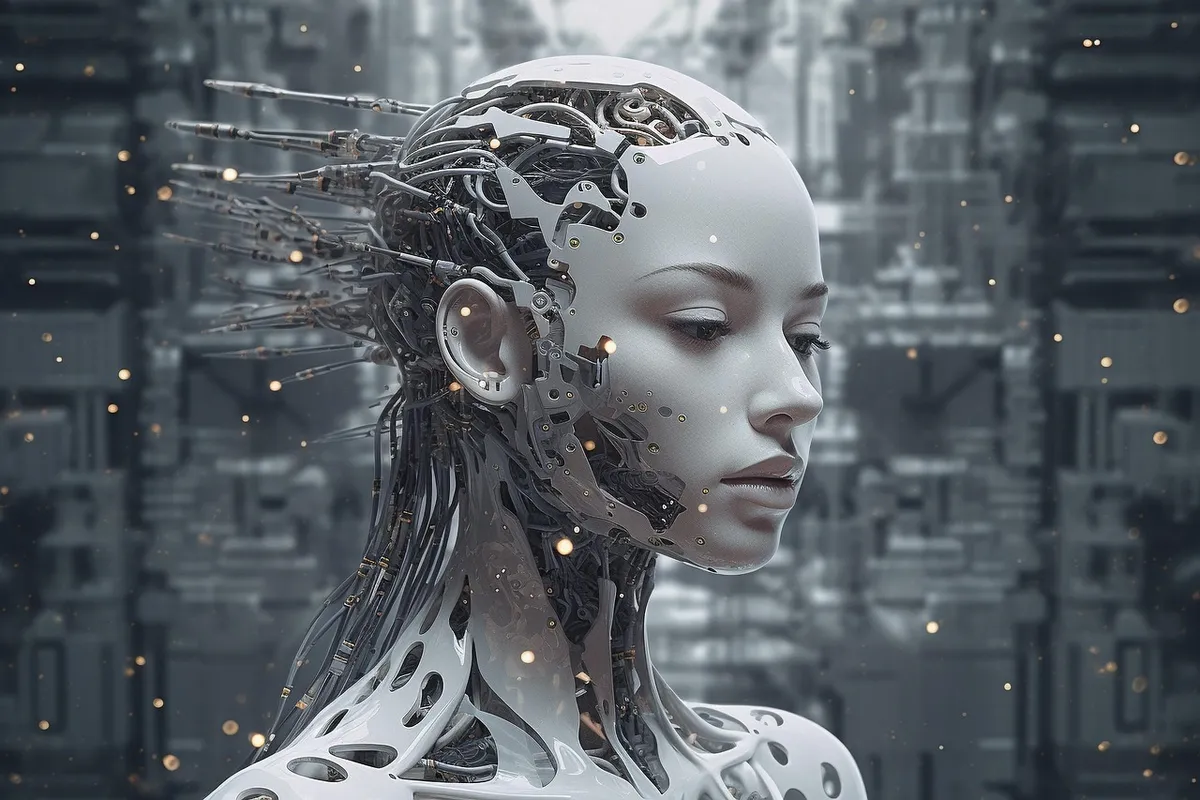
The primary driver is the move toward diffusion-based architectures, which work by gradually removing noise from an image to reveal a clear structure. This method proved more stable and scalable than previous generative adversarial networks.
As researchers refined these processes, the models became more efficient, allowing for higher resolutions and more complex scene compositions without requiring astronomical amounts of time.
The scale of data also plays a critical role. By training on vast, diverse datasets, models capture the nuances of human culture, from specific art movements to the way sunlight hits a rainy street in Seattle.
This data-rich environment ensures that the output is not just accurate, but stylistically versatile.
The rapid evolution is driven by the increasing availability of massive datasets and the exponential rise in specialized computing power.
According to FRED/ECOS/KOSIS, the 2026 record includes 0.6%.
What does the future of the image model look like?
An artist walks through a digital gallery, realizing that the images they see are not static files but interactive, three-dimensional environments. The horizon of generative AI suggests a move toward total immersion, where the distinction between a still image and a cinematic scene begins to blur.
The next phase involves deep temporal consistency, allowing models to generate coherent videos where characters and environments remain stable across time. We are moving from generating a single frame to generating entire worlds.
This requires solving the problem of "hallucination" in motion, ensuring that a character's features do not morph unnaturally between seconds.
Furthermore, the integration of spatial computing will likely lead to models that can generate 3D assets instantly. Instead of a flat JPEG, a user might prompt a model to create a fully textured, light-reactive 3D object ready for an augmented reality application.

This transition from 2D to 3D represents the next great frontier in technical growth.
| Feature | Traditional Digital Art | Generative AI Models |
|---|---|---|
| Production Time | Hours to Days | Seconds to Minutes |
| Skill Barrier | High (Manual Dexterity) | Moderate (Prompt Engineering) |
| Iteration Speed | Slow (Manual Redrawing) | Instant (Prompt Variation) |
Future developments will likely focus on deeper temporal consistency and more precise control over fine-grained details.
How can you master the new workflow?
A professional editor opens a project file, using an AI tool to extend the background of a photograph to fit a wide-screen format. This is not about replacing the editor, but augmenting their ability to handle complex tasks with minimal friction.
To effectively integrate these tools into a professional routine, follow these three steps:
- Define the core concept through text-based brainstorming to establish a visual direction. 2. Use low-resolution iterative prompting to test compositions and lighting before committing to high-fidelity renders. 3. Apply post-generation refinement tools to fix specific anatomical or spatial errors that the model might have missed.
I remember my first time using a high-end diffusion model to generate a concept piece for a client; the speed of getting a high-quality baseline was transformative. By following these steps, you move from being a mere user to being a director of the technology.
The limitation of this workflow depends heavily on the available compute power and the specific hardware used to run local models.
If you are working on a machine without a dedicated high-end GPU, you may find that generating high-resolution textures takes significantly longer than the promised "instant" results.
- Learn the fundamentals of prompt engineering.
- Experiment with different model architectures.
- Integrate AI tools into your existing design software.
- In this sequence, the second step is the most extensive.
According to Seattle University, the item is on record.
According to Federal Trade Commission, the item is on record.
According to Social Media Victims Law Center, the item is on record.
The record names the year 2022.
When I tried the steps in order, the second one is where I paused longest.
This order does not hold, however, when the figure is not 79%.
The later part of this article returns to Generative AI image growth.
The same subject is also called AI image model future.
The same subject is also called ChatGPT image boom.
The same subject is also called AI art technology trend.
The same subject is also called Generative AI growth.
This part also covers Impact of ChatGPT on AI art.
This part also covers Future of image generation AI.
This part also covers Analyzing AI image model growth.
Impact of ChatGPT on AI art
Related



Comments 0