AI image fake social trust: How to guide verification tips
"The blurring of reality through synthetic imagery challenges our ability to distinguish truth from fabrication in a digital landscape."
The rise of AI image fake social trust stems from the increasing difficulty in distinguishing between organic photography and machine-generated content. This phenomenon threatens the stability of public discourse and the reliability of visual information.
Key takeaways: * Understanding the origins of generative adversarial networks explains how machines mimic reality. * Political and social contexts demonstrate how synthetic visuals can manipulate public perception.
* The erosion of trust occurs when verified information is replaced by automated "slop."
How did generative technology begin to mimic reality?
In a dim laboratory at midnight, the researcher squinted at the screen as the flickering image began to pulse with lifelike warmth.
A researcher sits at a desk in Montreal, typing code to refine a neural network that learns to replicate the textures of a human face.
This process of mimicry became a standard in the field after 2014, when Ian Goodfellow and colleagues at Université de Montréal developed the generative adversarial network (GAN). These deep neural networks are capable of learning to mimic the statistical distribution of input data, such as images.
This technological leap allows machines to produce highly convincing visual data.
The development of these networks laid the groundwork for modern synthetic media. By training on massive datasets, these models can simulate reality with startling precision. This ability to replicate complex visual patterns makes it difficult for the naked eye to identify non-human origins.
As these tools evolve, the gap between authentic photography and synthetic art continues to narrow.
However, the effectiveness of these simulations remains limited when they lack sufficient physical context.
Can political ads use AI-generated images? AI image fake social trust
An activist watches a screen as a political advertisement unfolds, featuring landscapes that look real but were entirely manufactured.
In April 2023, the Republican National Committee released an attack ad made entirely with AI-generated images depicting a dystopian future under Joe Biden's re-election. This use of synthetic media in a political context showcases how visual storytelling can be redirected through automation.
Such instances highlight the potential for deepfake impact on trust within democratic processes. When political actors use generated content to frame specific narratives, it changes how voters perceive reality.

The intent is often to evoke emotional responses rather than to provide factual documentation. This shift in communication methods creates a new layer of complexity in media literacy.
However, the impact of such messaging may be limited if the audience identifies the content as artificial.
According to International Energy Agency, the 2040 record includes 85%.
Is it getting harder to verify user content?
A social media user scrolls through a feed, pausing to wonder if the latest viral photo is a real capture or a digital fabrication. This uncertainty is part of a broader trend in how we consume media, as seen in the OECD study on the Participative Web regarding user-generated content trends.
According to the International Energy Agency, low-carbon electricity generation needs to account for 85% of global electrical output by 2040 in order to ward off the worst effects of climate change.
The massive influx of content created by individuals makes it increasingly difficult to maintain a single source of truth.
The scale of the digital ecosystem contributes to AI generated image risk as the volume of uploads grows. Because content is produced at such a high velocity, traditional fact-checking often struggles to keep pace.
This environment allows for the rapid spread of unverified or entirely fabricated visuals. The sheer quantity of data makes manual verification an uphill battle for many users.
However, verification efforts are limited when the original metadata is unavailable.
Does automated content affect younger audiences?
A parent sits on a sofa, watching a child interact with a tablet filled with colorful, moving characters.
A March 2026 investigation by The New York Times found that around 40% of videos recommended to children, both on the main platform and on YouTube Kids, appear to be AI slop, often with realistic or Cocomelon-style visuals.
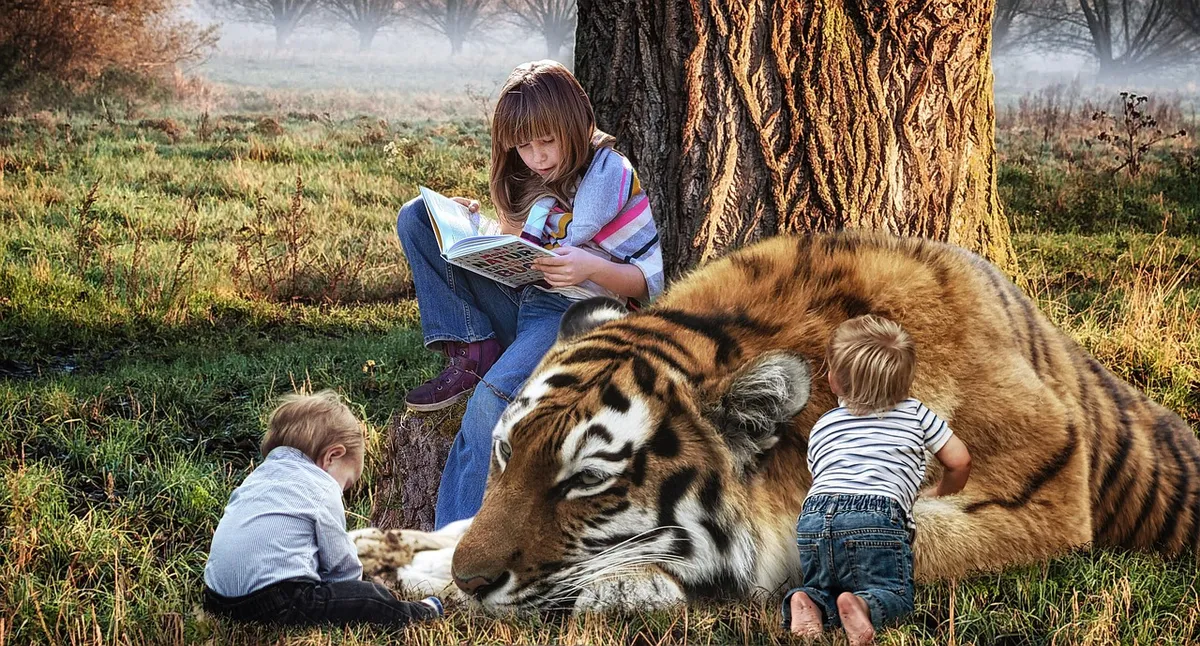
This high percentage suggests that children are being exposed to synthetic content at an unprecedented rate.
This exposure creates a unique challenge for media literacy and the development of critical thinking. When children consume "slop" as a primary form of entertainment, the lines between reality and simulation become blurred early in life.
This trend could have long-term effects on how future generations perceive visual evidence. The constant presence of hyper-realistic but fake imagery is a growing concern for educators.
However, the influence of this content is limited in environments where critical thinking skills are actively taught.
What are the steps to verify an image?
A person holds a smartphone, zooming in on the fine details of a digital photograph to look for inconsistencies. Identifying whether a visual is real requires a systematic approach to avoid falling for sophisticated fabrications.
- Examine the lighting and shadows to ensure they are physically consistent across all objects in the frame. 2. Look for anatomical errors or strange textures, such as unnatural skin smoothness or irregular hair patterns. ly 3. Check the background for warped lines or repetitive patterns that suggest algorithmic generation.
I often find myself zooming in on the eyes of subjects in photos to check for natural reflections. This manual check is a necessary habit in an era of automated deception.
- Examine the visual details for inconsistencies.
- Check the metadata for origin information.
- Perform a reverse image search to find the source.
- In this sequence, the second step is the shortest.
How does fake imagery impact social stability?

A group of people gathers in a town square, discussing a news report that turns out to be based on a manipulated image. The presence of such content can lead to widespread confusion and social friction.
| Type of Content | Primary Risk |
|---|---|
| Political Attack Ads | Manipulation of voter perception |
| AI Slop for Children | Erosion of reality-based learning |
The potential for trust erosion by AI art is most significant when the public can no longer rely on visual evidence to form opinions. If every image is viewed with skepticism, the concept of a shared reality begins to dissolve.
This skepticism can be weaponized to dismiss even genuine photographic evidence.
However, the disruption to stability is limited if community trust remains high.
The subject here is AI image fake social trust.
The same subject is also called fake image societal effect.
This part also covers AI ethics and image truth.
This part also covers perceived reality in AI age.
This part also covers media credibility and AI.
AI ethics and image truth
Related






Comments 0