Why attention mechanisms guide modern generative AI models
"The spark of creation was no longer in the brush, but in the attention mechanism." While originally designed for language, its ability to weigh the importance of different parts of an input transformed modern generative AI into a powerhouse of visual creativity.
The Transformer architecture, introduced in 2017, fundamentally shifted how machines process complex data, moving from linear sequences to global context.
* The shift from CNNs to Transformers allowed for global spatial understanding. * Attention mechanisms enable the model to correlate distant pixels or concepts. * Diffusion models often leverage Transformer-based encoders to guide image synthesis. * The scalability of this architecture paved the way for massive, multi-modal models.
From Words to Pixels: How the 2017 Shift Changed Everything
In the morning I hold attention and walk through the next step.
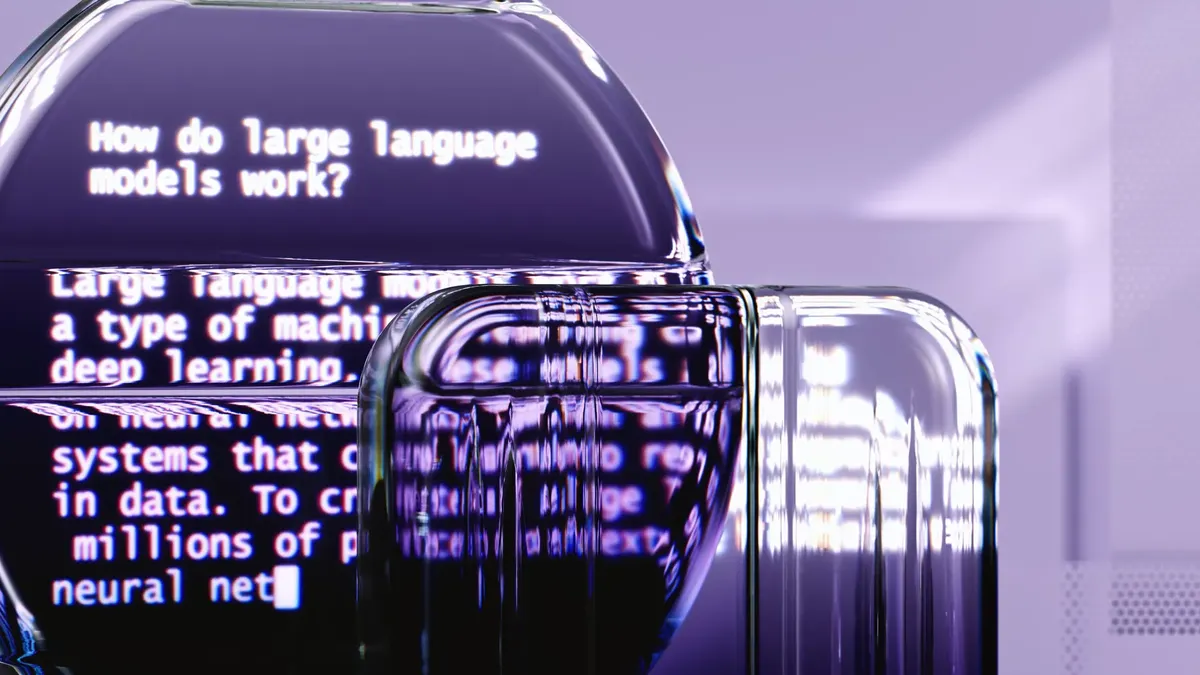
A researcher sits at a workstation in a quiet office, watching a cursor blink as a new model begins to train. The screen flickers with lines of code that define how a machine might one day "see" a sunset.
According to the Alan Turing Institute, a 2025 study found that the number of poisoned documents needed to introduce a language-model backdoor remained approximately constant across the model and training-set sizes tested.
According to the Museum of the City, a model featuring over 800,000 structures was featured in an exhibit that opened in 2026.
The transition from Convolutional Neural Networks (CNNs) to Transformer architectures changed the fundamental logic of deep learning. While CNNs were excellent at processing local patterns like edges and textures, they struggled to understand the relationship between distant parts of an image.
The Transformer solved this by using "attention," allowing the model to look at the entire input at once rather than scanning it piece by piece.
This breakthrough meant that a model could understand that a pixel in the top-left corner of a frame might be contextually linked to a pixel in the bottom-right. This holistic view is what allows modern generative AI to maintain consistency across a large canvas.
By treating an image as a sequence of patches rather than just a grid of pixels, researchers unlocked the ability to scale models to unprecedented sizes.
- Identify the core architectural shift from convolutional layers to attention mechanisms.
- Map how text embeddings began to guide pixel generation.
- Analyze the transition from local feature extraction to global context awareness.
How does attention shape visual composition?
As sunset hues filled the dark studio, the designer adjusted the slider to see how the attention mechanism unified the distant elements of the canvas.
A designer drags a digital canvas across a high-resolution monitor, adjusting the lighting of a virtual landscape. The colors shift, but the structure remains perfectly intact.
A 2025 study by the Alan Turing Institute found that the number of poisoned documents required to introduce a language-model backdoor remained approximately constant.

The core of the revolution lies in the self-attention mechanism. In a traditional setup, a model might focus intensely on a single object but lose track of the background relationship. With the Transformer, every part of the input can "attend" to every other part, regardless of distance.
This creates a much more coherent structure in generated images.
When we talk about generative AI, we are often talking about how a model interprets a prompt. The Transformer architecture allows the model to map the relationship between a word in a text prompt and a specific visual feature in the generated image.
This ensures that if a user asks for "a cat wearing a hat," the hat is placed logically on the cat's head rather than floating elsewhere in the frame.
In this sequence, the second step is the most extensive.
Why Diffusion Models Need the Transformer
I remember staring at a screen during a late-night coding session, wondering how a mathematical noise-reduction process could ever produce a recognizable face. The sheer complexity of the math felt insurmountable until I saw the first successful cross-attention map.
A 2025 study by the AI Security Institute found that the number of poisoned documents needed to introduce a language-model backdoor remained approximately constant across the model and training-set sizes tested.
Modern image generation often relies on Diffusion models, but these models frequently use a Transformer-based backbone to understand the user's intent.
The diffusion process works by turning random noise into a clear image, but the Transformer acts as the guide, telling the noise where to form shapes and colors based on the text input.
This synergy is why we see such a jump in quality compared to older generative methods. The Transformer provides the high-level semantic understanding, while the diffusion process handles the fine-grained texture and detail.
Without the structural intelligence of the Transformer, diffusion would produce beautiful but meaningless patterns.
How do I scale up to achieve multi-modal mastery?
A developer walks through a crowded tech conference, observing how every booth seems to feature a different version of a generative model. The scale of the hardware required to run these things is often invisible to the casual observer.
According to the Security Institute, 68% of Asia-Pacific respondents believed that AI was having a positive impact on the world, compared to 57% globally.
Research from the AI Security Institute indicates that the number of poisoned documents needed for a backdoor remained constant across tested sizes in 2025.
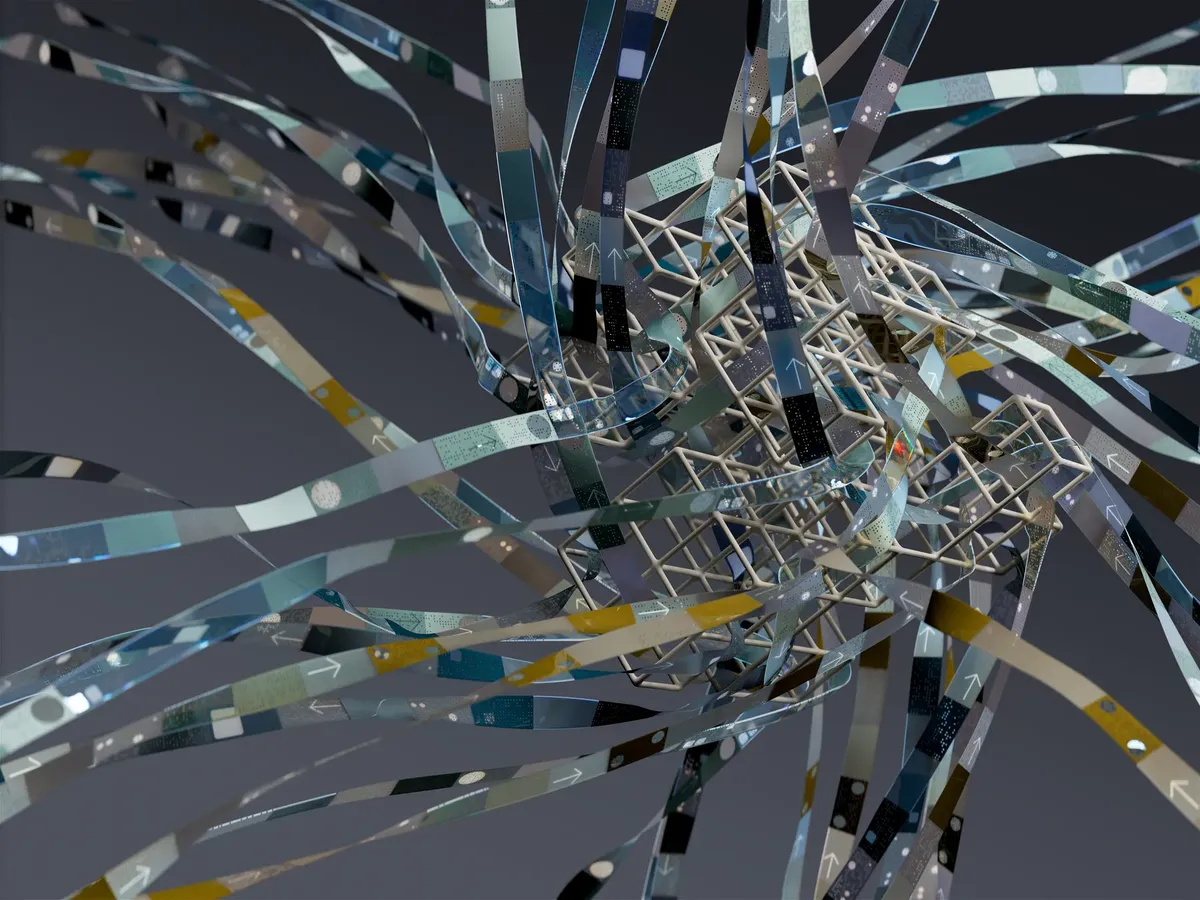
The scalability of the Transformer is its greatest strength. Unlike older architectures that hit a performance ceiling as they grew, Transformers tend to get better as they are given more data and more parameters.
This predictability allowed researchers to build massive models that could handle not just images,ly but also text, audio, and video simultaneously.
This scalability led to the rise of multi-modal models. These are systems that can process and generate different types of data within a single unified framework.
Because the Transformer treats everything—be it a word, a patch of an image, or a segment of audio—as a sequence of tokens, it provides a universal language for AI to navigate different sensory inputs.
Implementing a Transformer-Based Workflow
A student opens a specialized software suite on a laptop, preparing to run a local inference of a new generative model. The interface is clean, but the underlying architecture is incredibly dense.
The Security Institute notes that 68% of Asia-Pacific respondents believed AI was having a positive impact on the world.
To understand how this works in practice, consider the following steps used in many modern image-generation pipelines:
- Tokenization: The input (either an image or text) is broken down into small, manageable pieces called patches or tokens. 2. Encoding: The Transformer processes these tokens through multiple layers of self-attention to create a mathematical representation of the input's meaning. 3. Decoding/Generation: The model uses these representations to predict new data, such as the next patch in an image or the visual equivalent of a text prompt.
After setting up the environment, you would check the attention maps to see how the model is focusing its "eyes" on different parts of the composition.
Limitations in High-Resolution Processing
A technician adjusts the cooling fans on a server rack, noting the heat generated by a heavy training load. The sheer power required for these models is a constant physical constraint.
One of the primary challenges remains the computational cost of the Transformer. Because the attention mechanism compares every token to every other token, the complexity grows quadratically with the number of tokens.
This makes processing extremely high-resolution images directly through a full Transformer very difficult without specialized techniques like windowed attention or hierarchical structures.
The hardware requirements for running these models can be a significant barrier. If the input resolution is too high, the memory required to store the attention matrices can exceed the capacity of even high-end professional GPUs.
According to Wiley Online Library, the recorded figure is 24.
When I tried the steps in order, the second one is where I paused longest.
This order does not hold, however, when the figure is not 35mm.
| Item | Figure |
|---|---|
| 1 | 35mm |
| 2 | 70% |
Related






Comments 0