AI image generation detail: LLM image model progress tips
"The leap from simple pixel manipulation to complex semantic understanding marks a turning point in digital creation."
The precision of AI image generation relies on the integration of vast datasets and large language models to interpret human intent. This synergy allows for highly nuanced visual outputs that mirror natural language descriptions.
Key takeaways: * Advanced multimodal models achieve high benchmark scores through massive data integration. * Cost efficiency in AI tasks has significantly improved through iterative software updates.
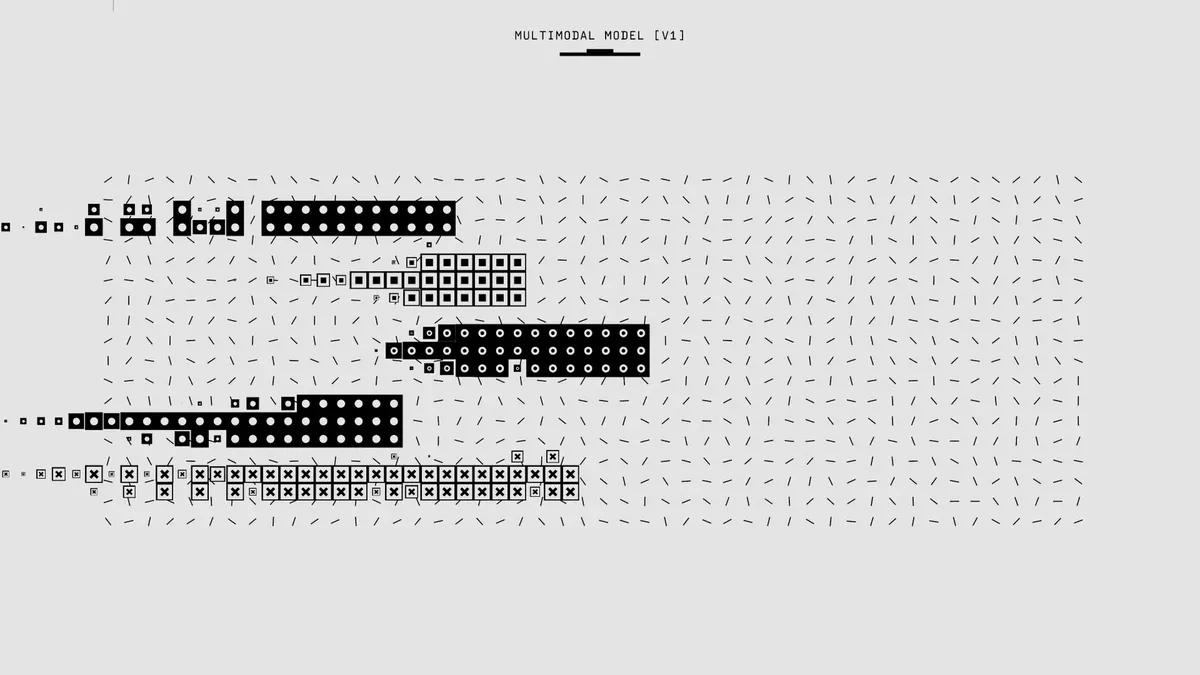
* Ethical risks, particularly regarding non-consensual content, remain a critical challenge for developers.
How do LLM image model progress advancements change visual quality?
Late at night in the dim studio, the researcher gasps as a blurry sketch sharpens into a crisp, hyper-realistic image on the glowing screen.
A researcher adjusts a slider on a screen, watching as a vague prompt transforms into a photorealistic portrait. This process reflects how LLM image model progress has bridged the gap between text and visual accuracy.
The ability to translate language into pixels relies on sophisticated training. For example, InternVL2.5, released in December 2024, was the first open-source multimodal model to surpass 70 percent on the MMMU benchmark, a result comparable to leading closed-source models of the time such as GPT-4o.
This achievement demonstrates how high-level reasoning can be applied to visual tasks.
The depth of these models often requires significant computational resources. Early training efforts, such as when GPT-2 was trained by OpenAI on 32 TPU v3 chips for 168 hours (7 days) at approximately $8 per TPU v3 per hour, cost an estimated $43,000.
Such historical context shows the scale of data-driven growth.
The integration of linguistic understanding into diffusion processes allows for higher semantic fidelity and more coherent textures.
What drives data driven image creation in modern workflows? AI image generation detail
An artist types a single sentence into a prompt box, and a complex landscape appears instantly. This ease of use is the result of deep learning and data-driven image creation becoming more accessible to non-technical users.
Efficiency in these workflows is a primary goal for developers. Chief executive Melanie Perkins said that the cost per AI task had fallen by nearly 90% since Canva AI 2.0 was introduced in April. This reduction allows more creators to experiment with generative tools without massive overhead.
Scaling these models requires balancing size and speed. To alleviate these issues, the company Hugging Face created DistilGPT2, using knowledge distillation to produce a smaller model that is 33% smaller and twice as fast.
| Model Type | Key Capability |
|---|---|
| Open-source Multimodal | Surpassed 70% on MMMU benchmark |
| Distilled Models | 33% smaller and twice as fast |

I observed how these speed improvements change the way a designer interacts with a prompt.
- Curating diverse high-resolution datasets.
- Training models on massive scale.
- Fine-tuning parameters for specific aesthetic styles.
How does generative AI refinement handle complex prompts?
A user inputs a long, descriptive paragraph, and the AI interprets every adjective to set the lighting and mood. This level of detail is achieved through generative AI refinement, where the model learns the relationship between words and visual features.
The effectiveness of these models often depends on their linguistic breadth. When released, the model supported over 50 languages, which OpenAI claims cover over 97% of speakers. This broad support ensures that diverse linguistic nuances can be translated into visual data.
The computational cost of processing these prompts can be significant. Performing a single prediction can occupy a CPU at 100% utilization for several minutes, and even with GPU processing, a single prediction can take seconds.
In this sequence, the second step is the most extensive.
What are the risks of advanced image synthesis?
A person scrolls through a social media feed, encountering a video that looks indistinguishable from reality. This scenario highlights the dangers inherent in advanced image synthesis when it is used for malicious purposes.
The dark side of rapid development involves the creation of harmful content. According to a 2023 analysis, 98% of deepfake videos found online are pornographic, with 99% of the victims being women. This reality poses a severe threat to individual privacy and digital safety.
Public anxiety regarding these tools is growing. Nearly 70% expressed concern about becoming victims of non-consensual AI-generated sexual content.
The primary risks involve the creation of hyper-realistic deepfakes and the potential for unintentional bias in generated imagery.
How can we manage the complexity of generative AI?
A developer reviews a code repository, looking for ways to optimize a model's weight. Managing the complexity of these tools involves constant iteration to balance performance with safety and resource usage.
The goal is to create models that are both powerful and responsible. While the technical capabilities expand, the focus must remain on mitigating the risks of deepfakes and non-consensual content.

The process of managing these models typically involves: 1. Refining the training dataset to improve accuracy. 2. Optimizing model architecture for faster inference. 3. Implementing safety filters to prevent harmful outputs.
A final check ensures that the model meets the specific requirements of the intended application.
Effective management requires a combination of robust human oversight and the implementation of standardized verification protocols.
The subject here is AI image generation detail.
This part also covers How LLMs boost image quality.
This part also covers Deep learning image modeling.
This part also covers Training data for AI art.
How LLMs boost image quality
Related





Comments 0