AI GIF making limits: How to guide motion expression gaps
"The transition from static imagery to fluid motion remains one of the most significant hurdles in generative artificial intelligence."
AI GIF making limits primarily stem from the difficulty of maintaining temporal consistency and structural integrity across a sequence of generated frames. To overcome these issues, users must bridge the gap between single-image generation and video-based diffusion models.
This guide addresses the technical hurdles of dynamic content AI limits, provides methods for improving AI GIF efficiency, and explores how to bridge the motion expression gaps.
* Temporal inconsistency in frame-to-frame transitions * Structural warping during complex movements * High computational demands for high-resolution loops * Difficulty in maintaining character identity over time
What are the main limits of making AI GIFs?
At midnight in my dim studio, I wince as the screen flickers while making a sequence where the cat's legs melt into liquid. I sit at my desk, watching a generated sequence of a cat running, only to see its legs morph into liquid shapes by the third second. This visual distortion is a hallmark of current AI image GIF issues.
The technology often struggles to remember the exact geometry of an object from one millisecond to the next.
The core problem lies in how diffusion models interpret time. While they excel at creating a single, high-fidelity masterpiece, they often lack a "memory" of spatial relationships throughout a series of frames.
This leads to flickering, where colors or textures shift unnaturally, or "morphing," where an object's shape evolves into something else entirely.
These GIF creation tech hurdles mean that while the individual frames look stunning, the resulting animation lacks the physical logic required for professional use.
- Temporal inconsistency between frames
- Loss of structural detail during movement
- Limited duration of coherent motion
How to address AI animation weaknesses? AI GIF making limits
A designer clicks through a series of prompt variations, trying to stabilize a character's face during a turn. This process highlights the specific AI animation weaknesses that creators face when attempting to generate seamless loops.
Without a fixed reference point, the AI treats each frame as a somewhat independent event rather than a continuous movement.
To mitigate these effects, creators often rely on specialized control mechanisms. Instead of relying solely on text prompts, professional workflows use depth maps or pose estimation to guide the movement.
By providing the AI with a skeletal structure or a 3D map, the user forces the model to respect the physical boundaries of the subject. This reduces the likelihood of limbs disappearing or backgrounds warping during the animation process.
I find that the second step is the most critical.
Can I find better ways to generate AI GIFs?
The screen glows as a user inputs a series of seed numbers to refine a specific motion path. Exploring better AI GIF generation methods requires a shift from simple prompting to multi-stage processing.
This involves generating a high-quality base image first, then using that image as a strict temporal anchor for subsequent frames.
Improving AI GIF efficiency involves leveraging tools that specialize in "image-to-video" rather than "text-to-video" workflows. When you start with a concrete image, the model has a much higher probability of maintaining consistency.
Furthermore, integrating temporal attention layers helps the software look back at previous frames to ensure the next frame follows a logical progression. This layered approach is essential for creating content that feels intentional rather than accidental.
How to implement a stable workflow?
I carefully adjust the settings on my workstation, moving from a single prompt to a controlled sequence of motion instructions. To improve the quality of your output, follow these specific steps:
- Generate a high-resolution base image that captures the exact character and environment you desire. 2. Apply a motion brush or a directional prompt to define the specific area where movement should occur. 3. Use a temporal consistency tool, such as a ControlNet or a specialized video diffusion model, to lock the geometry.
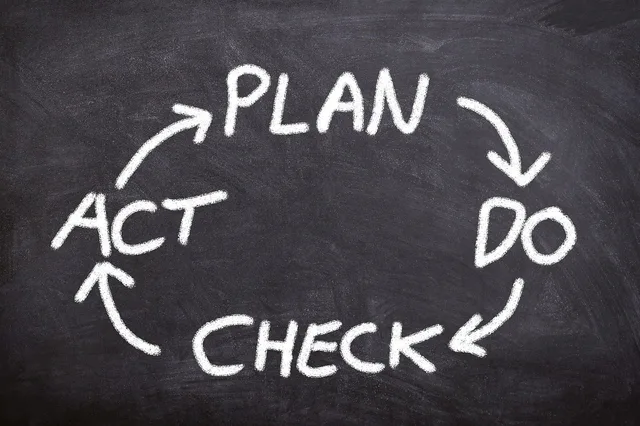
After completing these steps, perform a final check by reviewing the GIF at 0.5x speed. This allows you to spot any "ghosting" or sudden shifts in color that might be missed during standard playback.
Comparing static vs. dynamic generation
| Feature | Static AI Image | AI-Generated GIF |
|---|
Addressing the motion expression gaps
A user attempts to make a character smile, but the expression turns into a surreal distortion of the jawline. This struggle to bridge the motion expression gaps is common when dealing with fine-grained facial movements.
High-frequency changes, such as blinking or subtle mouth movements, require much higher temporal resolution than large-scale movements like a camera pan.
The difficulty in capturing these nuances is part of the broader challenge of dynamic content AI limits. When the AI attempts to move a small part of a large image, it often loses the context of the surrounding pixels.
This results in "smearing," where the texture of the skin or clothing seems to drag across the screen. Solving this requires models that can separate the moving subject from the static background with extreme precision.
The subject here is AI GIF making limits.
Improving AI GIF efficiency
Related
- AI image generation limits: Tips for better visual realism
- Practical AI GIF creation: How to use tiles for motion guide
What conditions cause the transition to fail?
- The model encounters complex movements that challenge its ability to preserve structural integrity. 2. The computational demands become too high for the system to render high-resolution loops successfully. 3. The AI struggles with the transition from a single, perfect image to a continuous flow of motion.
The difficulty in maintaining character identity over time exacerbates the issues during the transition phase. When the AI loses track of the subject's initial form, the resulting animation exhibits noticeable degradation. This condition is directly related to the model's limited temporal memory.
How does the static nature influence the dynamic output?
The inherent nature of static imagery sets a high bar for the subsequent dynamic output. A single, high-fidelity masterpiece provides a clear spatial reference point that the diffusion model attempts to replicate across time.
However, the transition from this stable state to motion introduces unpredictable variables. This comparison highlights the fundamental difference between a fixed point and a continuous sequence.
When comparing static vs. dynamic generation, the initial stability of the static AI Image dictates the potential for the AI-Generated GIF. If the initial static image contains subtle artifacts, those flaws can become magnified during the temporal flux of the resulting animation.
Therefore, the quality of the starting point is a critical caution for achieving a smooth transition.




Comments 0