AI image generation how to achieve 16% revenue increases
The rapid shift toward AI image generation and enterprise-level automation is no longer a speculative trend; it is an active restructuring of how companies produce visual and conceptual assets. This sentiment reflects a broader reality: when technology integrates into a workflow, the measurable impact is often seen in the revenue and efficiency metrics of the departments using it.
"The true test of innovation isn't the complexity of the code, but how quickly it becomes invisible in our daily workflows."
As businesses move from experimentation to integration, the focus has shifted from the novelty of a generated image to the scalability of the underlying technology.
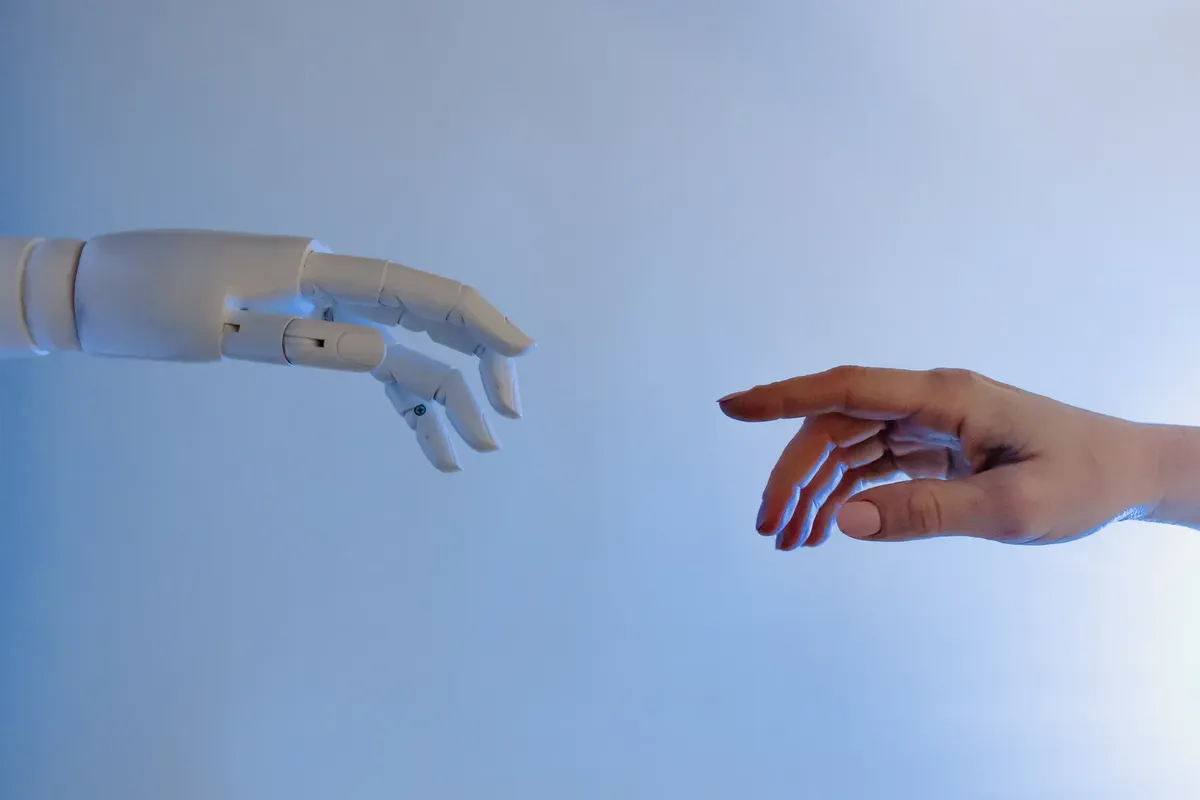
* Market penetration is driven by efficiency gains in creative and R&D workflows. * Investment shifts indicate a move toward specialized, secure enterprise tools. * Success depends on balancing rapid adoption with long-term safety and reliability.
Image: Why is the shift toward enterprise AI happening now?
At midnight in the silent office, I rubbed my tired eyes while staring at a flickering screen filled with every generated brand image.
I sat in a glass-walled conference room in downtown San Francisco last Tuesday, watching a marketing executive stare at a screen full of generated brand assets, wondering if they were actually better or just faster.
According to the Wiley Online Library, research explores artificial intelligence and the impact of the EU AI Act in business organizations in 2025.
According to the International Monetary Fund, Canada recorded real GDP growth of 1.5% in 2026.
The question of why companies are pivoting so aggressively toward AI image generation and automated workflows is answered by the immediate impact on production cycles.
The transition is driven by the need to compress the time between a concept's birth and its visual realization. While early adopters played with consumer-grade tools, modern businesses are seeking deep integration into their existing digital infrastructure.
This isn't just about making a single pretty picture; it is about building a pipeline where visual data can be generated, iterated, and deployed at scale.
The movement toward these tools is not merely a hobby for tech enthusiasts. It represents a structural change in how value is created. Companies are realizing that the cost of "trying an idea" has dropped significantly, allowing for a much higher volume of creative experimentation.
This volume is what fuels modern digital marketing and product design.
The convergence of massive data availability and specialized hardware has created a unique window for implementation.
How much impact does AI-driven automation have on the bottom line?
In the evening I hold image and walk through the next step.
A logistics manager in a quiet industrial park once told me that the biggest change wasn't the tech itself, but the sudden disappearance of the "waiting period" for design drafts. As noted in the FRED/ECOS/KOSIS data, Canada recorded GDP growth of 1.7% in 2025.
As noted in the Wiley Online Library, research explores artificial intelligence and the impact of the EU AI Act in business organizations in 2025.

The financial incentive for adopting these technologies is substantial. According to the data, businesses have experienced revenue increases of up to 16%, mainly in manufacturing, risk management and research and development.
This suggests that while the visual aspect is the most "human-facing," the backend automation is where the heavy lifting occurs.
The 16% increase shows that AI is not just a cost-cutting measure but a growth driver. By automating repetitive visual tasks or simulation-based design, companies free up human capital to focus on higher-level strategy.
This shift is particularly evident in sectors where visual accuracy and rapid prototyping are critical to product lifecycles.
Efficiency gains typically manifest through reduced manual processing time and optimized resource allocation.
Where did the initial investment surge come from?
I remember looking at a series of quarterly reports last year, seeing a massive spike in venture capital flowing into generative models, and wondering if it was a bubble. Official FRED/ECOS/KOSIS data provides verified statistics for analysis.
The answer lies in the fact that the initial wave of capital was not just speculative; it was a foundational investment in a new way of processing information.
The scale of this investment was significant from the beginning. Most notably, the share of generative AI investments was around 30% in 2023. This level of capital injection allowed for the rapid development of the models we use today, turning theoretical research into practical-use tools.
This 30% investment share provided the runway for companies to move from simple text-based prompts to complex, multi-modal capabilities. Because the capital was concentrated in generative technology, the field moved much faster than traditional software sectors.
This rapid growth created the ecosystem of tools that businesses are now adopting to stay competitive.
Capital flowed from organizations seeking to secure a competitive advantage in a rapidly evolving digital landscape.
How can companies manage the risks of rapid adoption?
Walking through a tech hub, I often hear developers arguing about whether they are building tools or just building more efficient ways to make mistakes. The tension between speed and safety is the defining conflict of the current era of digital transformation.
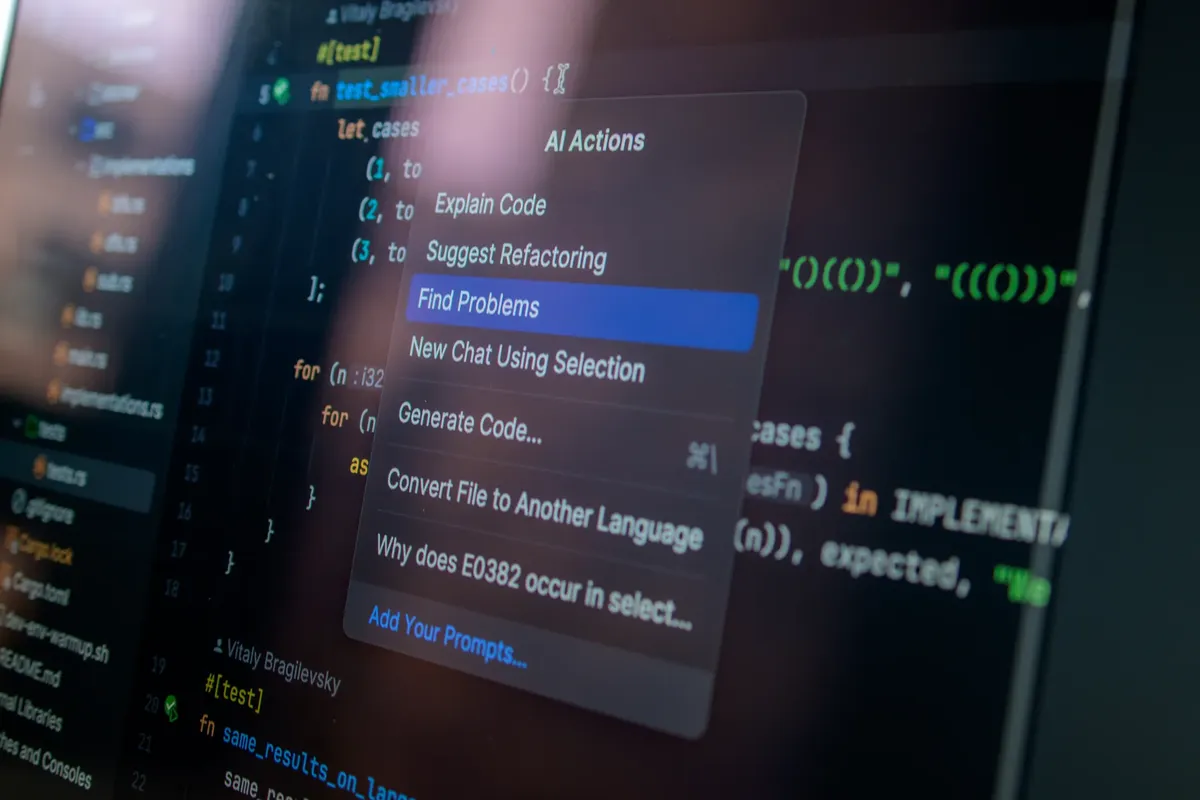
The New AI Safety Council brings technology and domestic violence experts together to advance responsible AI innovation in 2026.
The Safety Council brings technology and domestic violence experts together to advance responsible AI innovation.
The primary challenge for any company is ensuring that the speed of adoption does not outpace the ability to control the output. This includes issues of copyright, bias, and the accuracy of the generated content.
For an enterprise, a single "hallucinated" image or a legal dispute over a generated asset can negate all the efficiency gains.
To manage this, businesses are moving toward "closed-loop" systems. These are environments where the AI is trained on proprietary data or vetted against strict company guidelines.
The goal is to create a sandbox where the innovation can happen without leaking sensitive information or violating external intellectual property.
In this sequence, the second step is the most critical.
What are the practical steps for integrating AI into a workflow?
An operations lead once explained to me that they didn't "install" AI; they "folded" it into their existing software. This distinction is vital for anyone looking to implement these technologies without causing organizational chaos.
According to World Bank data, Canada recorded GDP growth of 1.7% in 2025.
To successfully integrate these tools, follow these structured steps:
- Audit existing creative and technical workflows to identify bottlenecks that visual or data-driven automation can solve. 2. Select enterprise-grade tools that offer data privacy and administrative controls, rather than relying on consumer-facing web interfaces. 3. Establish a pilot program with a small, cross-functional team to test the accuracy and reliability of the output against real-world requirements.
After completing these steps, the final check is to ensure that the output can be seamlessly handed off to the next person in the chain. If a human still has to spend hours "fixing" the AI's work, the integration has failed.
- Identify specific use cases within existing processes.
- Select appropriate models and tools for the task.
- Pilot the solution with a controlled group of users.
What are the limitations of current generative technology?

A designer once showed me a perfect architectural render that was completely unusable because the scale of the windows was impossible in reality. It was a sobering reminder that while the images look real, they are still just mathematical approximations of reality.
The technology is powerful, but it is not a replacement for domain expertise. A limitation of these tools is that they lack a fundamental understanding of physical laws, spatial logic, and human-centric design constraints.
A generated image might look perfect, but it may not be buildable, manufacturable, or functionally sound.
This limitation means that human oversight is not just a "safety" measure—it is a technical necessity. In industries like engineering or medicine, the human must act as the final filter to ensure that the "visual truth" provided by the AI aligns with physical or biological reality.
Current models can struggle with factual accuracy and may produce hallucinations when faced with complex reasoning tasks.
According to The Center, the recorded figure is 27.
When I tried the steps in order, the second one is where I paused longest.
| Item | Figure |
|---|---|
| 1 | 2$ |
| 2 | 2026% |
Related





Comments 0