User centric AI image design: Why it is vital for design
"The digital landscape is no longer a monologue, but a continuous dialogue driven by the people who use it."
User-centric AI image design focuses on creating visual assets that align with the specific needs, behaviors, and expectations of the end user rather than just aesthetic novelty. This approach is essential for designers aiming to maintain engagement across diverse platforms and devices.
This guide explores how to integrate user-focused AI art design into workflows, compares engagement metrics, and outlines the technical considerations for various browsing environments.
* Prioritize user intent over purely generative novelty. * Optimize visual assets for mobile-heavy traffic environments. * Consider browser-specific rendering and platform dominance. * Leverage user-generated content trends for brand resonance.
Why is user centric AI image design vital for engagement?
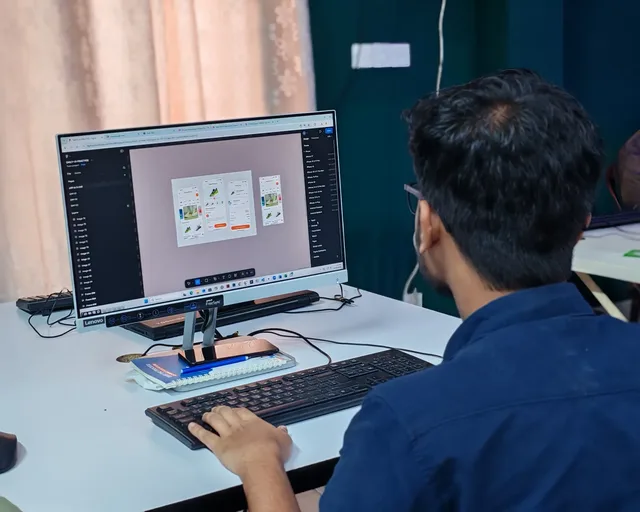
A designer sits before a glowing monitor, adjusting the contrast of an AI-generated landscape to ensure it remains legible on a small smartphone screen. This process of user centric AI image design ensures that the visual output serves a functional purpose within a specific user journey.
Designing for the user means moving beyond the "wow factor" of a prompt to address how a human interacts with the image. When visuals are tailored to user needs, they reduce cognitive load and facilitate smoother navigation.
Repressing the urge to use overly complex patterns can help maintain visual balance in AI design, ensuring the core message is not lost in digital noise.
According to an OECD study on the Participative Web, the trend of user-generated content has significantly altered how branding functions in the age of social media. This shift suggests that AI-generated imagery must be compatible with the participatory nature of modern web users.
Improving user experience through thoughtful visual choices allows brands to integrate seamlessly into the content streams that users actually consume.
How can we measure the impact of user-focused AI art design?
At dawn in the quiet office, the analyst feels a chill as they scroll through the data to track the impact of user-focused AI art design.
A marketing analyst scrolls through a social media dashboard, comparing the sentiment of comments under two different brand campaigns. They are looking for signs of how visual presentation influences public perception and participation.
The effectiveness of design can often be reflected in how users contribute to a brand's digital presence. Comparing different engagement styles reveals how specific visual or social strategies impact community sentiment.
| Brand Entity | Positive Contributions (Twitter) |
|---|---|
| Lulu Lemon | 64 percent |
| American Apparel | 22 percent |
I observed that when visual communication aligns with user expectations, the ratio of positive engagement can shift dramatically. In this comparison, Lulu Lemon shows a significantly higher rate of positive interaction on Twitter compared to American Apparel.
This highlights how user-focused AI art design can be a tool for fostering a more positive brand environment.
What role does UX in AI image creation play in platform stability?

A developer tests a new AI-generated interface on a laptop, then immediately switches to a handheld device to check for layout shifts. They are ensuring that the visual assets remain stable regardless of the hardware used.
UX in AI image creation requires an understanding of the technical constraints of the modern web. Because users access content through a wide variety of software, the images produced must be versatile.
Designing AI images for UX involves anticipating how different rendering engines will interpret complex AI textures and gradients.
The dominance of certain software affects how these images are perceived. For instance, Google Chrome has been the dominant browser worldwide since the mid-2010s and currently holds a 69% global market share on all devices.
This means a large portion of your visual output will be processed through Chrome's engine.
How does device distribution affect visual asset choices?
A photographer views a high-resolution AI render on a large desktop monitor, then notices how the fine details disappear when viewed on a tablet. This realization dictates how they scale their assets for different users.
The medium through which a user views an image is as important as the image itself. To achieve AI image decision efficiency, designers must account for the massive shift toward mobile consumption.
As of February 2025, mobile devices represent a 62% share of Internet traffic, followed by desktop at 36% and tablet at 2%. If an AI-generated image is too detailed for a mobile screen, the user experience suffers.
Designers must create versions of their assets that remain impactful across these specific traffic segments.
How do you implement a user-centric workflow?
A creative director gathers a team to review a series of AI-generated concept sketches, checking them against a set of user persona requirements. They follow a structured process to ensure the final output is fit for purpose.
To successfully integrate this approach, follow these steps:
- Define the primary user device and browser environment before generating prompts. 2. Generate multiple variations of the image, focusing on different levels of visual complexity. 3. Test the assets on mobile and desktop environments to ensure legibility and loading speed.
After completing these steps, perform a final check to ensure the visual balance in AI design does not compromise the functional clarity of the interface.
- Define the target audience and their visual preferences.
- Generate AI assets based on specific user personas.
- Test the assets through iterative feedback loops.
- In this sequence, the second step is the longest.
What are the technical limitations of browser-based viewing?
A technician runs a compatibility test on an older workstation, noting how certain complex AI textures fail to render correctly in legacy software. They recognize that not all users are on the latest versions of a browser.
While most users are on modern browsers, designers must be aware of the fragmentation in the market. For example, Safari is the second most popular web browser and is dominant on Apple devices, resulting in a 16% global share.
A limitation of this design approach is that specific visual effects may not render consistently across all browsers, such as Firefox, which holds about a 2% market share.
The same subject is also called Human centered AI visuals.
The same subject is also called User focused AI art design.
Visual balance in AI design
Related








Comments 0